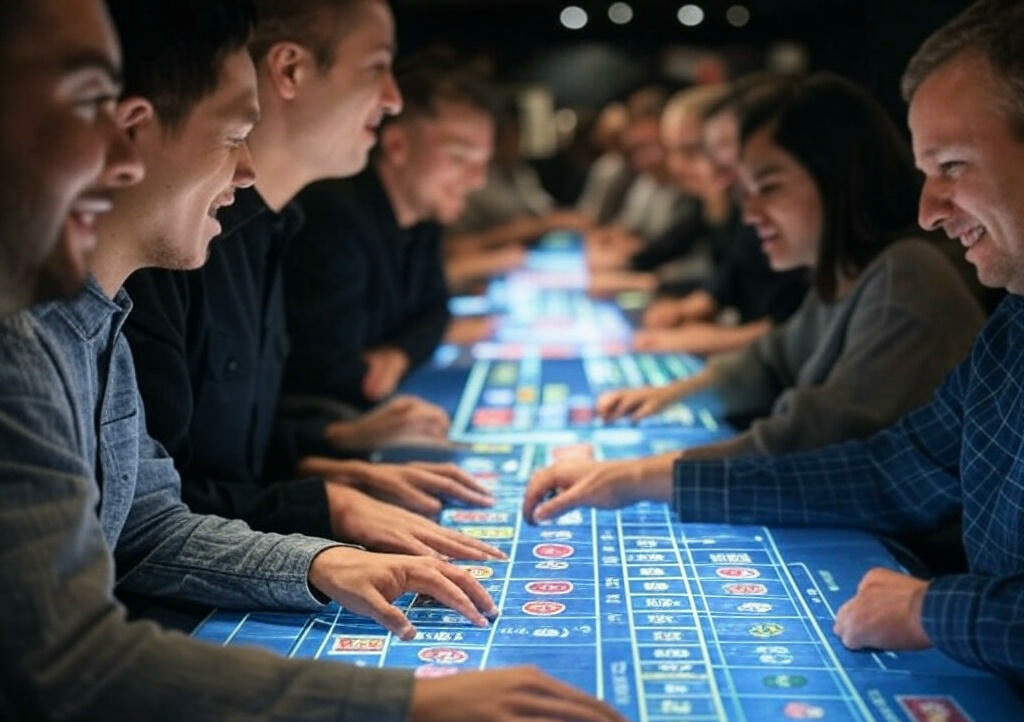
Golden Thrills: Beyond Gaming, a Quest for the Extraordinary

This article is a commercial promotion. The prize amount (€210,000) is based solely on statements made by the game's creators and has not been independently verified. Before purchasing this game or participating in this quest, we encourage you to independently verify the legitimacy of the setup and the reality of the advertised prize.
How is prestige being redefined in the gaming world?
For decades, prestige in the gaming world has been defined by abstract or virtual concepts. From exclusive VIP lounges to digital bonuses amassed behind a screen, the industry has often relied on purely digital elements. However, "Golden Thrills" are no longer confined to a simple category of casino games or online entertainment.
Today, the gaming experience incorporates a return to the physical world. Discerning players are no longer satisfied with merely beating an algorithm or racking up imaginary points. They crave a quest that transcends the boundaries of the traditional gaming table, grounding itself in real-world geography.
What are these new real-stakes quests?
This demand has given rise to a hybrid between physical board games and treasure hunts. In this new ecosystem, the financial stakes are very real. Living room entertainment transforms into an expedition, blurring the lines between a boxed game and geographical exploration.
Players take on the role of seekers, cardboard game boards incorporate cryptographic elements, and symbolic victories give way to the discovery of tangible treasures.
What are the key takeaways?
To grasp the scale of this evolution in the gaming world, here are the core elements of these hybrid entertainments:
- A local creation: Creators from Liège have developed "Guardians of Legends," a board game tied to a global treasure hunt featuring a real-world prize of €210,000.
- A tangible prize: The treasure is an egg forged in pure 24-karat gold, adorned with three 18-karat white gold leaves, and set with nearly 600 precious stones.
- A phygital experience: Riddles hidden within the game lead to a concealed treasure. Everything can be solved from the comfort of your home, but you will need to travel to the actual location to unearth the chest.
Why is the gaming experience becoming physical?
Evolving consumer expectations have pushed game creators to innovate. The proliferation of purely digital experiences has sparked a desire for gaming stakes to materialize in the real world. Many players now seek tangible rewards that can transform their gameplay into a genuine physical adventure.
What is the Belgian initiative hitting the market?
It is within this context that new concepts have emerged. Developers from Liège created "Guardians of Legends," a board game paired with a global treasure hunt boasting a real-world bounty of €210,000, according to the official announcement. It’s no longer about winning a symbolic match, but rather engaging in a competition where the prize holds substantial financial value.
How has the public responded?
The viability of this hybrid model has been validated by player interest. Consumers are more than willing to purchase a boxed game if it serves as an entry ticket to a high-stakes quest. The materialization of rewards satisfies a craving for escapism, proving that the concept of golden thrills truly resonates when grounded in reality.
What is the anatomy of these new gaming treasures?
The promise of a substantial reward hinges on the nature of the coveted object, which is what gives the hunt its true appeal.
What object lies at the heart of the quest?
To bring this objective to life, the creators called upon the expertise of master jewelers from the Liège region. The treasure is a 24-karat pure gold egg. This artifact is a far cry from classic trophies or virtual rewards. It is an authentic piece of fine jewelry, specifically crafted to serve as the ultimate bounty.
How is player demographics evolving?
Introducing this type of reward into a board game shifts the typical audience profile. Traditionally centered around families or friend groups, the player base is now expanding.
The presence of a solid gold object attracts new demographics fascinated by the complexity of the challenge:
- Amateur cryptographers: drawn to the intellectual rigor of the puzzles.
- Art enthusiasts: interested in the fine craftsmanship of the jewelry.
- Investment challenge seekers: viewing the quest as an opportunity to hunt for a tangible asset.
Thus, the game steps outside the realm of casual leisure and enters the domain of an extended intellectual challenge.
How do these hybrid treasure hunts work?
The organization of these experiences relies on an architecture that blends the comfort of playing at home with the demands of a real-world expedition. This phygital approach (a hybrid of physical game materials and actual geography) is rewriting the rules of gaming engagement.
How do you go from the comfort of the couch to an expedition in the field?
The core premise is designed to be accessible from the start. Riddles hidden within the game lead to a concealed treasure. Everything can be solved from home, but players will eventually need to travel to the location to unearth the chest. This duality allows participants to immerse themselves in the lore and analyze maps right from their living rooms.
However, validating their hypotheses requires them to test their theories against actual topographical reality, compelling participants to organize a physical trip.
What is the geographical scope of the search?
To ensure the quest takes on an international scale, the designers dissolve certain geographical borders by integrating complex clues. The difficulty of the challenges is calibrated to withstand simple internet searches, demanding genuine, cross-disciplinary critical thinking.
What is the explorer's golden rule?
Faced with the vastness of the potential playing field, the creators recommend a rigorous approach. Vincenzo Bianca, one of the game’s designers, emphasizes: "If you have doubts about the location, then it's not the right one." This rule dictates that the solution, once uncovered, should be mathematically indisputable, thereby preventing unnecessary travel.
How does the "Golden Thrills" experience compare to classic gaming?
To fully grasp the differences brought about by hybridizing a board game with a jewelry hunt, it is helpful to analyze the structures that separate a standard playthrough from a hybrid quest.
How can we differentiate these gaming models?
The following table highlights the fundamental disparities between these two worlds, illustrating how the inclusion of real stakes transforms the experience.
| Evaluation Criteria | Classic Board Game | Hybrid Phygital Experience |
|---|---|---|
| Spatial Dimension | Confined to the living room table | Begins at home, requires traveling to the treasure's actual location |
| Time Commitment | A few hours per game | Requires prolonged commitment to solve the quest |
| Nature of the Reward | Fictional (victory points, personal satisfaction) | Tangible (Pure gold, monetary value) |
| Cognitive Investment | Short-term tactics | Cryptographic analysis and long-term perseverance |
How does this impact player behavior?
This matrix illustrates a fundamental shift in resolution mechanics. While a classic game requires a one-off investment for immediate entertainment, the hybrid experience demands ongoing dedication.
The fact that the puzzles can be solved from home—yet require traveling to the actual location to unearth the chest—forces the player to become the protagonist of a real-life search, often necessitating the logistical planning of a final expedition.
Why does the Belgian ecosystem foster gaming innovation?
The birth of such projects is nurtured by a highly creative environment. Belgium's gaming ecosystem is particularly dynamic, acting as a vibrant crossroads for game designers.
Major annual events set the tempo, bringing together passionate enthusiasts. These gatherings provide exchange platforms where creators, publishers, and players can share ideas and develop mechanics that break away from traditional formats.
It is within this fertile ground, rich in associations and networking, that artisans and creators from Liège forged the connections needed to design a global treasure hunt—fusing Belgian board game culture with the thrill of international adventure.
What are the limits and challenges of these hybrid quests?
Despite the immense interest these experiences generate, hybrid games come with several limitations. The requirement to physically travel to a location to retrieve the chest introduces a logistical and financial barrier. Players lacking the budget or time to travel may feel excluded from the final phase.
Furthermore, the complexity of the puzzles—often rooted in daunting cryptography—can deter audiences simply looking for casual evening entertainment. The prolonged time investment spanning months or even years demands a level of rigor and perseverance far removed from the usual consumption of board games.
Frequently Asked Questions: What should you know about these treasure hunts?
The emergence of these hybrid games has sparked curiosity among puzzle enthusiasts. Here are some answers regarding this new adventure format.
What is the actual value of the prize?
Creators from Liège developed the board game ‘Guardians of Legends,’ paired with a worldwide treasure hunt featuring a real-life bounty of €210,000, thereby establishing a highly valuable, tangible reward.
Do you need to be a cryptography expert to play?
While the difficulty and format attract many cryptography aficionados, the game is also geared toward classic board gamers looking for a collaborative or brain-teasing challenge spread out over time.
Is traveling mandatory to win?
Yes, that is the very essence of the phygital aspect. The riddles hidden within the game lead to a concealed treasure. Everything can be solved from home, but you will ultimately have to travel to the location to unearth the chest.
How are these initiatives shaping gaming tourism?
The integration of fine jewelry and financial stakes into physical game mechanics illustrates a fascinating diversification within the entertainment industry. The appeal no longer lies solely in virtual interfaces, but also in the pursuit of a tangible adventure.
By encouraging players to leave their living rooms to complete a physical quest, these initiatives are pioneering a new form of gaming tourism. Geographical exploration becomes an extension of the intellectual effort exerted at home. These experiences cater to an audience ready to combine analytical thinking with logistical planning to solve very real challenges.
Responsible Gaming: Gambling is strictly prohibited for minors (21+ in Belgium). Please play in moderation. If you need help, contact 0800 35 777 (joueurs.info).